Undercounter Ice Machine vs. Modular Ice Machine: Which Is Best for Restaurants?
Restaurants rely on a consistent ice supply for serving chilled beverages, preparing food, and maintaining smooth kitchen operations. However, choosing the right commercial ice machine for restaurant use can be challenging, especially when deciding between undercounter and modular models. Each type offers different advantages in terms of ice production, storage capacity, space requirements, and installation, making it important to understand how they fit your restaurant’s needs.
In this article, we’ll compare undercounter ice machines and modular ice machines, covering their production capacity, storage, installation, and maintenance needs. We’ll also discuss how access to the right commercial ice machine parts can help maintain performance, address component failures, and reduce equipment downtime in busy restaurants, cafés, and bars.
Table of Contents
How Much Ice Does Your Restaurant Actually Need?
Choosing a restaurant ice machine starts with your daily demand. The amount of ice your restaurant needs depends on how many customers you serve and how many cold drinks you prepare each day. A small café may need less ice, while a busy restaurant or bar may need several hundred pounds daily. Knowing your daily ice requirements helps you choose the right machine without wasting money on extra capacity.
Consider these factors before choosing an ice machine:
- Number of customers: More customers mean more ice is needed throughout the day.
- Types of drinks: Restaurants serving iced coffee, soft drinks, and cocktails need more ice.
- Busy hours: Make sure your machine can produce enough ice during lunch, dinner, and peak hours.
- Ice storage: Choose a storage bin large enough to hold ice between production cycles.
- Ice type: Full or half cubes suit most drinks; nugget ice suits blended drinks and healthcare. Not every model offers every ice type.
An undercounter ice machine is usually suitable for small cafés and restaurants with lower ice demand. A modular ice machine is a better option for busy restaurants that need larger quantities. Regular maintenance and replacing faulty commercial ice machine parts can also help keep your machine producing ice efficiently.
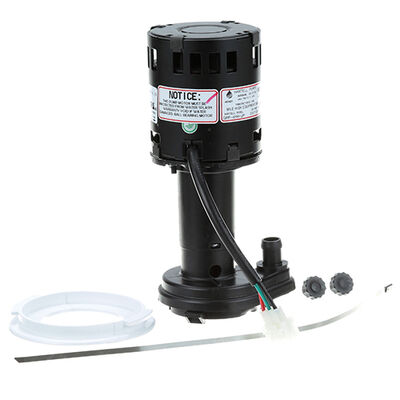
Looking for commercial kitchen replacement parts? Shop a wide selection of ice machine parts, including door gaskets, drain pans, drier filters, expansion valves, and water pumps, designed to help keep your equipment operating efficiently.
When Is an Undercounter Ice Machine Best for a Restaurant?
An undercounter ice machine (also called an undercounter ice maker) is ideal for small restaurants, cafés, and bars that need approximately 50–200 lbof ice per day without using extra floor space. These machines fit beneath counters and provide convenient access to ice for preparing cold drinks and serving customers.
An undercounter model is a practical choice in these situations:
- Small cafés: A machine producing 50–100 lb of ice per day may suit cafés serving around 50–100 customers, depending on beverage sales.
- Small bars: Models producing 100–200 lb daily may meet the needs of bars with moderate cocktail and chilled-drink demand.
- Limited kitchen space: Compact units with widths of approximately 15–30 inches can fit into suitable counter spaces, depending on the model.
- Built-in ice storage: Storage bins commonly hold around 20–80 lb of ice, providing a ready supply between production cycles.
Before purchasing, compare the machine’s daily production capacity with its storage-bin capacity. For example, a machine producing 100 lb daily with a 30 lb bin may suit a small café, but heavy peak-hour demand could empty the bin before more ice is produced. Regular cleaning and replacing faulty commercial ice machine parts, such as water filters and inlet valves, can help maintain consistent production.
When Is a Modular Ice Machine Better for a Restaurant?
A modular ice machine (modular ice maker) is better for restaurants that need large quantities of ice throughout the day. Unlike an undercounter model, it has a separate ice-making head that sits on a compatible storage bin or dispenser. This design allows restaurants to choose production and storage capacities that match their daily demand.
A modular ice machine is a suitable choice in these situations:
- High daily ice demand: Models producing 300–1,000 lb or more of ice per day can support busy restaurants, hotels, and bars, depending on customer volume.
- Large storage requirements: Separate ice machine bins can hold approximately 200–500 lb or more of ice, helping restaurants maintain a supply during peak service hours.
- Multiple service areas: Restaurants can select compatible dispensing systems or plan ice distribution for different workstations, depending on the equipment setup.
- Room for equipment installation: Modular units require sufficient space for the ice-making head and storage bin, along with proper ventilation, water supply, drainage, and electrical connections. Ice machines come in air-cooled, water-cooled, and remote-condenser versions; a remote condenser moves heat and noise outside the kitchen.
- Growing business needs: A separate ice head and bin provide flexibility when selecting equipment for higher production or storage requirements.
Before purchasing, compare the machine’s rated daily production with your restaurant’s peak demand and the bin’s storage capacity. Actual output depends on operating conditions, so check manufacturer specifications. Regular cleaning and timely replacement of faulty commercial ice machine parts, such as water inlet valves, pumps, and condenser components, can help maintain reliable ice production.
Watch How To Keep Your Commercial Ice Machine Clean
Undercounter vs. Modular Ice Machine: How Do They Compare?
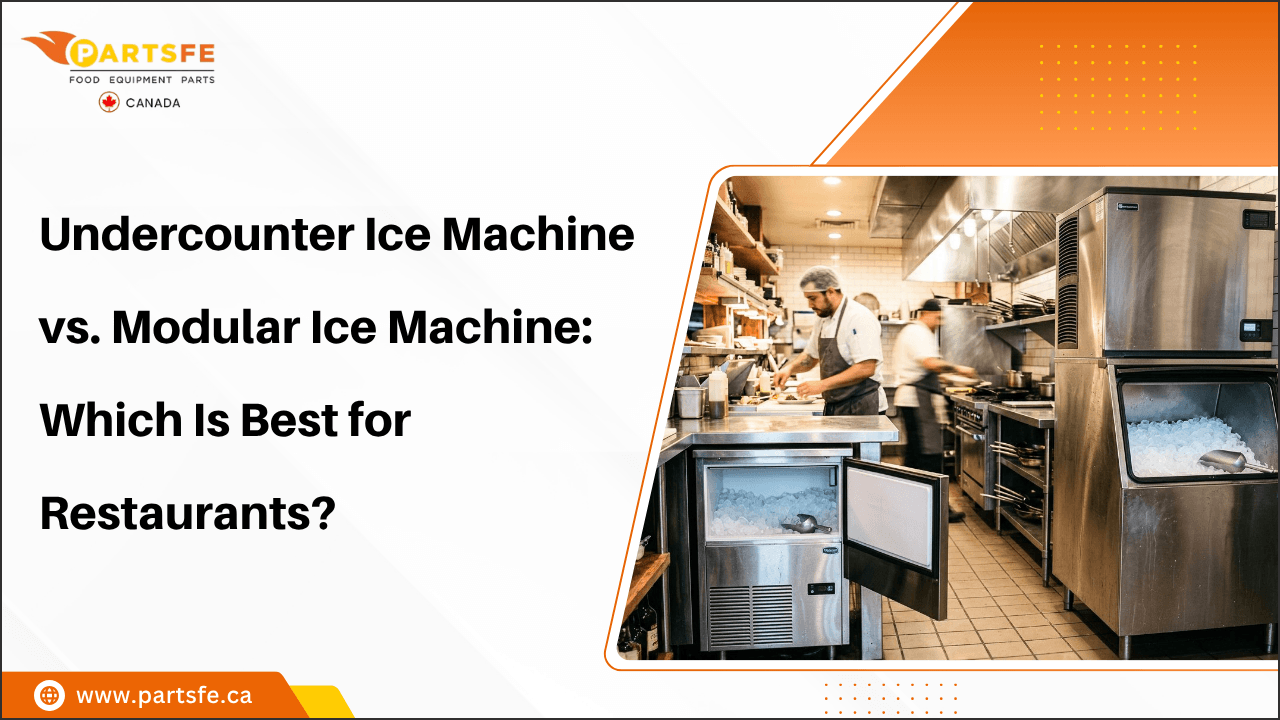
Undercounter and modular machines can both support commercial foodservice operations, but they solve different equipment-planning problems. The main differences involve configuration, storage, space requirements, production flexibility, and future expansion. The table below highlights the practical differences to help restaurant operators compare the two options:
| Comparison Factor | Undercounter Ice Machine | Modular Ice Machine |
|---|---|---|
| Configuration | Ice production and storage are integrated into one unit. | The ice-making head and storage bin are separate components. |
| Space Use | Designed for installation beneath an appropriate counter or work surface. | Requires dedicated space for the head and storage bin. |
| Storage | Built-in storage with a fixed capacity, typically about 20–80 lb. | Storage capacity can be selected separately from production. |
| Production Flexibility | Generally tied to the capacity of the individual machine. | Offers a broader range of production configurations. |
| Installation | Typically simpler because major components are integrated. | Requires coordination of the ice head, bin, connections, and installation requirements. |
| Workflow | Convenient for beverage stations and areas where ice is needed nearby. | Better suited to centralized or larger-scale ice distribution. |
| Expansion | Increasing capacity may require replacing the unit. | Greater flexibility for increasing production or storage capacity. |
| Typical Use | Cafés, smaller restaurants, bars, and secondary beverage stations. | High-volume restaurants, hotels, banquet facilities, and larger bars. |
| Upfront Cost | Lower purchase and installation cost as a single unit. | Higher cost because the ice head and bin are bought separately. |
| Daily Production | About 50–200 lb | About 300–1,000+ lb |
The commercial ice maker configuration should be selected according to production requirements, storage capacity, installation space, workflow, and the manufacturer's specifications. Comparing these factors can help prevent a situation where the machine produces enough ice over a full day but cannot keep up with demand during peak service.
Check out commercial ice machine air filter replacement: ultimate guide.
Summary: Which Ice Machine Should Your Restaurant Choose?
Choosing between an undercounter and modular ice machine depends on your restaurant’s ice demand, available space, storage needs, and service setup. Undercounter models are suitable for smaller operations that need a compact, integrated solution near a bar or beverage station, while modular systems are better for high-volume operations requiring greater production, storage, or configuration flexibility. Leading brands such as Hoshizaki, Manitowoc, Scotsman, and Ice-O-Matic offer both types.
Key Takeaways
- Estimate ice requirements based on actual restaurant usage and peak service periods.
- Choose an undercounter model when space efficiency and convenient access are priorities.
- Consider a modular system when higher production or separate storage is required.
- Compare production capacity with storage capacity rather than evaluating either specification alone.
- Check water, drainage, electrical, ventilation, and clearance requirements before installation.
- Select the ice machine configuration that matches your restaurant’s current workflow and future needs.
Need replacement parts for your ice machine? Shop ice machine parts at PartsFe, including water pumps, inlet valves, filters, and bins, to keep ice production running.
FAQs
How much ice does a restaurant use per day?
Restaurant ice consumption varies by customer volume, menu, beverage service, operating hours, and business type. As a general starting point, restaurants may require around 1.5 lb. of ice per meal, while bars and beverage-heavy operations can consume considerably more.
Do modular ice machines need a separate ice bin?
Yes. A modular ice machine is typically an ice-making head designed to operate with a separate storage bin. This setup allows restaurant operators to select an appropriate bin size and create a larger ice production and storage system for higher-volume operations.
Are undercounter ice machines suitable for busy bars?
Only for moderate volume. An undercounter ice machine can be suitable for a bar with moderate ice consumption and limited installation space. However, a busy bar with high cocktail volume may need a modular ice machine with separate storage to maintain an adequate supply during extended periods of peak service.
What is the difference between an undercounter and a modular ice machine?
An undercounter machine combines ice production and storage in one compact unit that fits under a counter. A modular machine is a separate ice-making head that sits on a bin and is built for higher output.
What are the main commercial ice machine types?
The main types are undercounter, modular (head plus bin), and countertop dispenser models, available as air-cooled, water-cooled, or remote-condenser units.
References:
https://www.hoshizakiamerica.com/ice-machines/remote-condensers/
Disclaimer: This content is for informational purposes only. Always refer to the manufacturer’s specifications and installation guidelines for your specific ice machine.