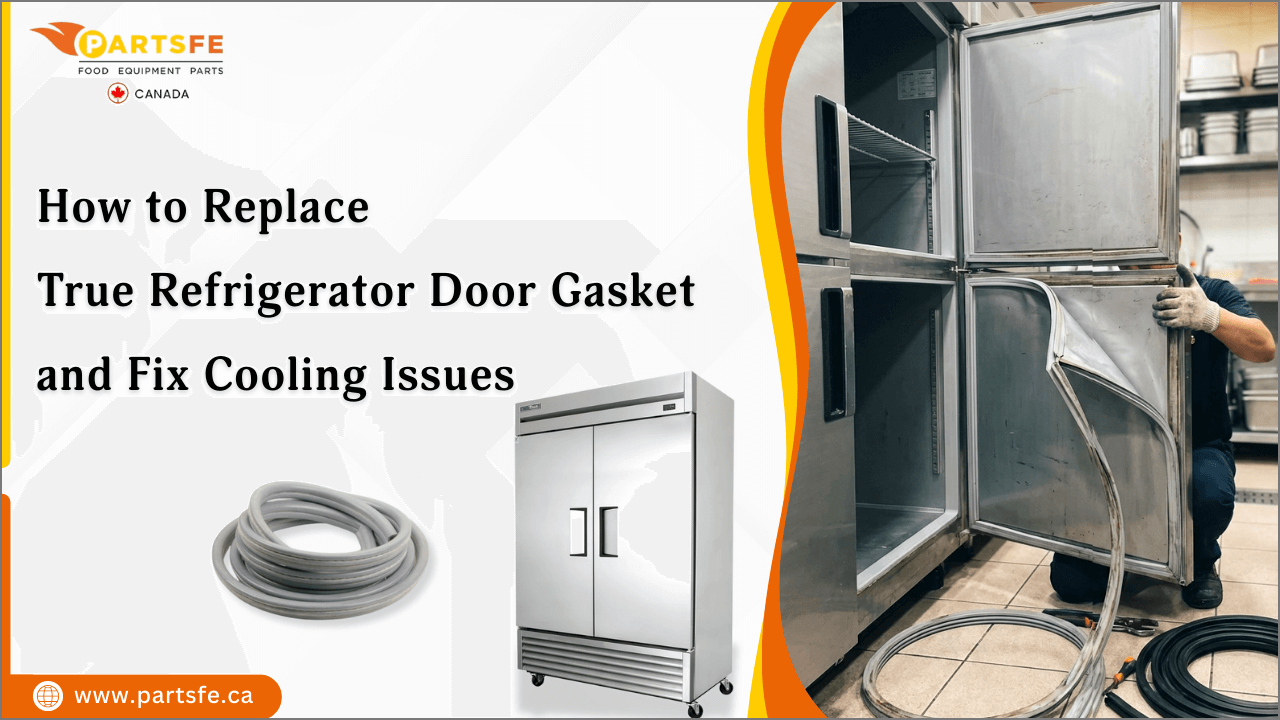
How to Replace True Refrigerator Door Gasket and Fix Cooling Issues
A True refrigerator is built for durability and precise temperature control, making it essential in commercial kitchens and foodservice environments. Over time, cooling problems can develop, often due to a worn or damaged door gasket. When the gasket fails, cold air escapes and warm air enters, leading to uneven cooling, higher energy use, and increased compressor strain.
This guide covers how to identify gasket-related issues, prepare for a True refrigerator door gasket replacement, perform proper installation, and restore reliable refrigerator door gasket cooling performance.
Identifying Cooling Issues Caused by a Worn True Refrigerator Door Gasket
Not all cooling problems originate from compressors or control boards. In many cases, the issue is mechanical and visible if you know what to look for. A failing gasket directly affects refrigerator door gasket cooling performance by allowing temperature leakage.
Common Warning Signs of a Bad Door Gasket
-
Temperature Fluctuations: If internal temperatures rise unexpectedly or vary between cycles, the refrigerator may be losing cold air through gaps in the gasket.
-
Excessive Compressor Runtime: A compromised seal forces the system to run longer to compensate for heat intrusion, accelerating wear on refrigeration components.
-
Moisture, Frost, or Condensation: Warm air entering the cabinet introduces humidity, which can cause condensation around the door frame or frost buildup near the evaporator.
-
Visible Cracks or Deformation: Over time, gaskets harden, tear, or warp. Even minor damage can break the airtight seal.
-
Dollar Bill Test Failure: Close the door on a dollar bill and gently pull it out. If it slides out easily, the seal is insufficient.
Why Gasket Issues Are Often Misdiagnosed
Cooling problems caused by gasket failure are frequently mistaken for thermostat or refrigerant issues. Replacing electronic components without checking the door seal can lead to unnecessary expense and continued inefficiency. Before investing in major True refrigeration parts, always inspect the gasket—it is one of the simplest and most cost-effective fixes.
Looking for reliable restaurant equipment parts online in Canada? Shop at PartsFe CA for durable, precision-fit parts that keep your equipment running efficiently. From restaurant and commercial kitchen equipment parts to motors, switches, and controls, we offer quality products with fast Canada-wide shipping and expert support you can trust.
Tools, Safety Steps, and Preparation for Replacing a True Door Gasket
Proper preparation is essential for a smooth and effective True refrigerator door gasket replacement. Having the right tools and following safety steps prevents installation errors and premature gasket failure.
Tools You Will Need
-
Replacement door gasket (model-specific)
-
Flathead or Phillips screwdriver (if required)
-
Clean cloths or microfiber towels
-
Mild detergent and warm water
-
Heat source (hot water or hair dryer)
-
Food-safe lubricant (optional)
Safety and Preparation Checklist
|
Preparation Step |
Why It’s Important |
|
Disconnect power |
Eliminates electrical risk and prevents the compressor from running while the door remains open during the gasket replacement process |
|
Remove or secure stored products |
Protects perishable items from temperature exposure if the refrigerator door stays open for an extended period |
|
Confirm the correct gasket |
Ensures the gasket matches the door size and mounting style, preventing gaps, poor sealing, and cooling loss |
|
Condition the new gasket |
Softens the material and removes packaging folds, allowing the gasket to sit evenly against the door frame |
|
Clean the door frame and gasket channel |
Removes grease, debris, and residue that could interfere with gasket seating and reduce sealing effectiveness |
|
Organize tools and workspace |
Allows uninterrupted installation, reducing the risk of improper alignment or rushed steps |
Completing these preparation steps ensures the new gasket seats correctly, forms a uniform seal, and delivers reliable refrigerator door gasket cooling performance from the start.
Explore commercial refrigeration made easy: the elements you need to know, which breaks down essential components, operating principles, maintenance basics, and best practices for efficient, reliable refrigeration in commercial settings.
Step-by-Step Process to Replace a True Refrigerator Door Gasket
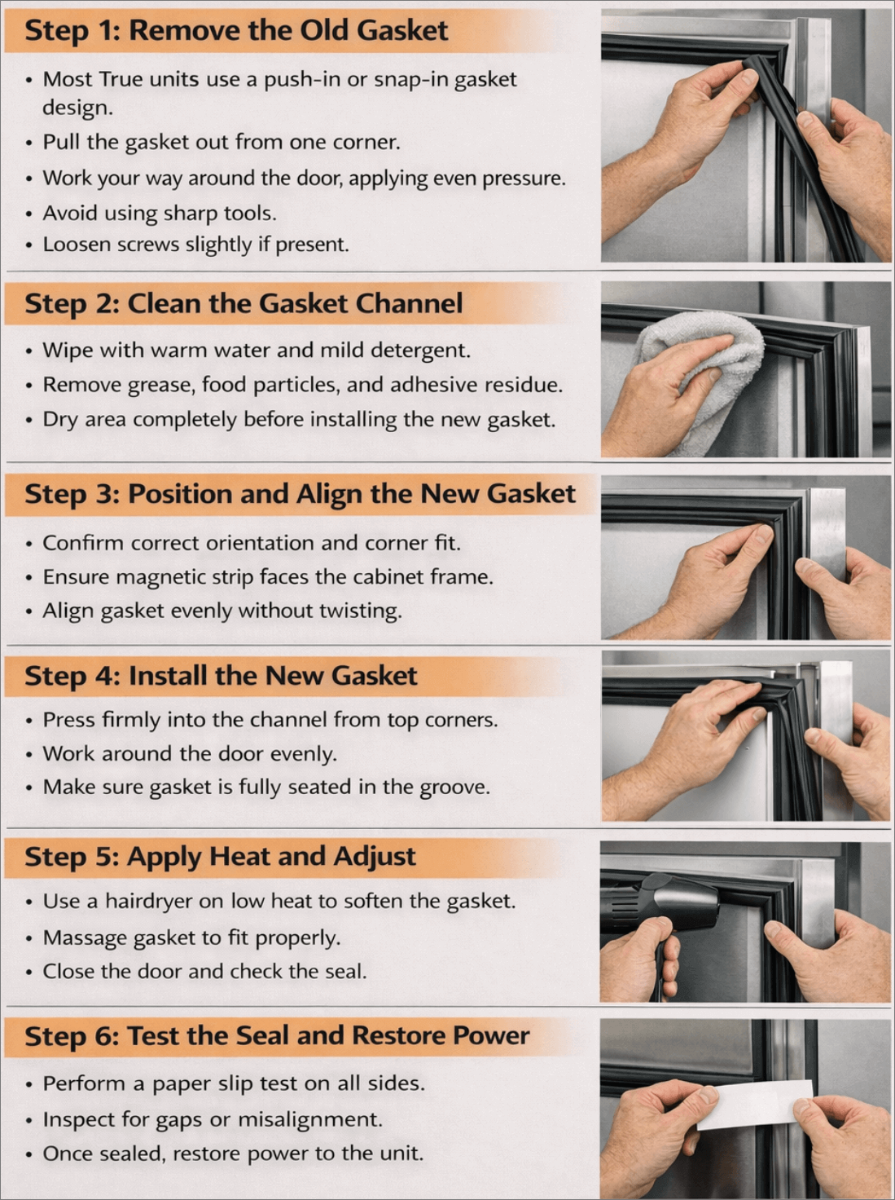
Replacing a door gasket is a straightforward task when performed methodically. Follow these steps carefully to avoid misalignment or premature wear.
|
Disclaimer: This infographic is intended for general guidance only. Always disconnect power before servicing refrigeration equipment. Follow the manufacturer's instructions for your specific True refrigerator model. Improper installation or handling may result in equipment damage, personal injury, or voided warranties. |
Check out True refrigerator troubleshooting: how to fix common problems, which covers common faults, diagnostic steps, and practical fixes to restore efficient cooling and reliable operation.
How Proper Gasket Installation Restores Cooling Efficiency
A correctly installed door gasket does more than close the door—it directly impacts system performance, energy efficiency, and food safety.
-
Improved Temperature Stability: An airtight seal prevents warm air infiltration, allowing the thermostat to regulate temperatures accurately. This stability protects perishable inventory and reduces temperature recovery time after door openings.
-
Reduced Energy Consumption: When cold air stays inside the cabinet, the compressor cycles less frequently. Over time, this lowers electricity costs and reduces mechanical wear on major True refrigeration parts such as compressors, fan motors, and evaporators.
-
Extended Equipment Lifespan: Consistent operating conditions minimize stress on internal components. A simple gasket replacement can significantly extend the service life of a True refrigerator.
-
Enhanced Food Safety Compliance: Stable temperatures help meet health code requirements and prevent spoilage. For commercial kitchens, this directly supports compliance and customer safety.
-
Quieter Operation: Excessive compressor runtime often leads to noticeable noise. Restoring the door seal returns the unit to its normal, quieter operating rhythm.
When to Call a Professional for True Refrigerator Door Gasket Replacement?
Call a professional for True refrigerator door gasket replacement when the gasket is cracked, warped, loose, or no longer seals tightly, causing cold air leaks, condensation, temperature fluctuations, rising energy costs, or compressor overworking. Professional service is also recommended if the door is misaligned, food safety is at risk, moisture buildup persists, or multiple DIY attempts fail to restore proper sealing and optimal refrigeration efficiency.
Summary: Ensuring Optimal Performance After True Refrigerator Door Gasket Replacement
Maintaining optimal performance from a True refrigerator starts with proper door sealing. A worn or damaged gasket is a common yet preventable cause of cooling loss, higher energy consumption, and unnecessary strain on refrigeration components. Timely inspection, correct diagnosis, and a structured, True refrigerator door gasket replacement process help restore efficiency without costly part replacements. Ongoing gasket care and routine checks ensure long-term reliability, stable temperatures, and protection of stored products.
Key Takeaways:
-
Worn door gaskets are a leading cause of cooling inefficiency and air leaks in True refrigeration systems.
-
Following a structured True refrigerator door gasket replacement process restores proper sealing and temperature stability.
-
Proper refrigerator door gasket repair reduces energy usage and minimizes strain on critical True refrigeration parts.
-
Routine cleaning and inspection of door seals help prevent future cooling issues.
-
Consistent maintenance ensures reliable refrigerator door gasket cooling performance and protects product quality over time.
FAQs
How often should a True refrigerator door gasket be replaced?
A door gasket should typically be replaced every 2–4 years, or sooner if you notice cracks, air leaks, or cooling inefficiency—especially in high-use commercial kitchens.
Can a damaged door gasket cause cooling problems?
Yes. A worn gasket allows warm air inside the unit, causing temperature fluctuations, higher energy use, and reduced refrigerator door gasket cooling performance.
Is professional help needed to replace a True refrigerator door gasket?
Usually not. True refrigerator door gasket replacement is a simple task with basic tools, but professional service may be needed if issues continue after replacement.
How to replace the door gasket on a True refrigerator?
To replace the door gasket on a True Refrigeration unit, unplug the refrigerator, pull out the old gasket, clean the channel, then press the new gasket firmly into place and test the seal.