The Future of Grilling Made Simpler: Inside the Rise of One-Platen Cooking Technology
Commercial kitchens are increasingly turning to advanced cooking equipment to improve productivity, consistency, and service speed. Traditional grilling often involves manual flipping and continuous monitoring, which can increase labor demands and lead to variations in cooking results.
One-platen cooking technology addresses these challenges by using a heated upper platen and lower cooking surface to apply controlled heat and pressure from both sides. This streamlined approach can shorten cooking times, standardize results, and simplify repetitive grilling tasks.
This blog explores how one-platen cooking systems work, their advantages for high-volume foodservice operations, and practical maintenance practices for maintaining efficient equipment performance.
What Is One-Platen Cooking Technology and How Does It Work?
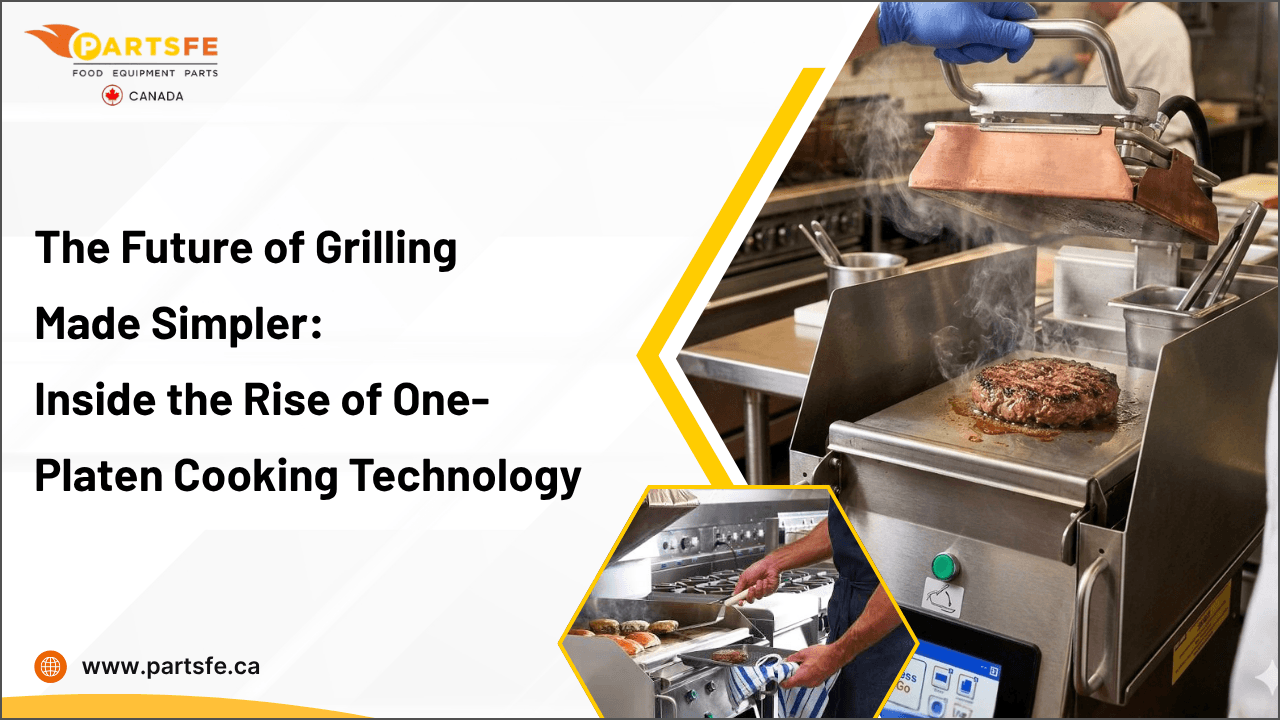
One-platen cooking technology is an advanced contact grilling system that cooks food using heat from both the top and bottom surfaces. It combines a stationary lower cooking plate with a heated upper platen that lowers onto the food during the cooking cycle.
Unlike traditional open griddles that transfer heat from only one direction, one-platen grills create direct contact on both sides of the product. This improves heat transfer, reduces cooking time, and delivers more consistent results. The cooking process typically involves four key steps:
1. Product Placement: The operator places food items such as burger patties, chicken portions, or sandwiches on the lower cooking surface.
2. Automatic Platen Closure: The heated upper platen lowers and applies controlled pressure based on the selected cooking settings.
3. Dual-Sided Heat Transfer: Heat transfers through the product from both surfaces simultaneously, reducing the need for manual flipping or repositioning.
4. Programmed Cooking Completion: After the preset time and temperature cycle finishes, the platen automatically lifts, allowing the operator to remove the cooked product.
Modern one-platen grills include advanced features that improve cooking precision and operation, as shown in the table below:
|
Component |
Function |
|
Lower cooking plate |
Provides a heated surface for consistent cooking |
|
Upper heated platen |
Delivers direct heat from above for faster cooking |
|
Temperature controls |
Maintains accurate cooking temperatures |
|
Pressure adjustment system |
Ensures proper contact with different food thicknesses |
|
Programmable settings |
Stores cooking cycles for consistent results |
These features reduce manual monitoring and create a more automated cooking process, making one-platen grills ideal for high-volume restaurants.
Check out what’s next for restaurant equipment: 10 innovations every food business should watch for future growth
Key Benefits of One-Platen Grilling for Faster, More Consistent Results
Below are the major advantages of one-platen grilling for commercial kitchens that help improve speed, consistency, and efficiency.
-
Faster Cooking: One-platen grills heat food from both sides simultaneously, reducing cooking time and eliminating the need for manual flipping during busy service periods.
-
Consistent Results: Controlled temperature, pressure, and cooking settings help maintain uniform quality across every batch, regardless of operator experience.
-
Better Food Quality: Even heat distribution improves browning, texture, and moisture retention while reducing overcooking and food waste.
-
Improved Efficiency: Automated cooking steps reduce manual workload, allowing kitchen teams to manage higher order volumes with less effort.
-
Food Safety: Programmable cooking cycles support standardized preparation, reducing manual errors and improving cooking control.
How One-Platen Grills Are Transforming High-Volume Commercial Kitchens
One-platen grills are helping high-volume kitchens improve productivity by automating repetitive cooking tasks and reducing manual involvement. By managing cooking time, pressure, and temperature, these systems allow staff to focus on other preparation and service activities while maintaining consistent food quality.
Their compact design also helps restaurants maximize kitchen space without adding multiple cooking stations. With faster workflows, simpler staff training, and dependable performance, one-platen grills support modern foodservice operations, including quick-service restaurants, catering businesses, and high-demand commercial kitchens.
Best Practices to Maximize Performance and Extend the Life of One-Platen Grills
Below are the essential maintenance practices that help keep one-platen grills performing efficiently for longer.
-
Daily Cleaning: Cleaning the grill after use prevents grease, food residue, and buildup from affecting cooking performance. Follow manufacturer-approved cleaning methods to protect surfaces and components.
-
Surface Maintenance: Keeping cooking plates clean and free from damage helps maintain proper heat transfer and consistent cooking results. Regular inspections can prevent issues caused by buildup or surface wear.
-
Component Inspection: Routine checks of moving parts, temperature controls, electrical connections, and seals help identify potential problems early and reduce repair needs.
-
Staff Training: Proper operator training ensures correct loading, cleaning, and program selection. This reduces equipment misuse and helps maintain efficient performance.
Watch the best grill grates to fit your budget and basic grilling needs for better commercial kitchen performance.
Summary: Why One-Platen Technology Is the Future of Commercial Grilling
One-platen cooking technology is changing commercial grilling by combining dual-sided heating, precise temperature control, and automated cooking cycles. These features help restaurants reduce cooking time, improve consistency, and streamline kitchen workflows during busy service periods.
-
One-platen technology cooks food from both sides for faster preparation.
-
Automated cooking cycles help deliver consistent results across every batch.
-
Precise heat and pressure control supports better cooking quality.
-
Reduced manual handling helps improve kitchen productivity during peak hours.
-
Compact equipment design can help optimize valuable commercial kitchen space.
-
Regular cleaning and inspections help maintain performance and extend equipment life.
Shop now at PartsFe to keep your restaurant equipment parts operating at peak performance. We offer a wide range of dishwasher, fryer, ice machine, plumbing, and oven parts designed for consistent performance and long-term use.
FAQs
Does a one-platen grill need professional installation?
Installation requirements vary by model. Businesses should follow manufacturer guidelines for electrical connections, ventilation, placement, and safety clearances to ensure proper operation.
How long does a commercial one-platen grill last?
A commercial one-platen grill can deliver years of performance when it is cleaned regularly, operated correctly, and maintained through routine inspections and servicing.
What are common one-platen grill problems?
Common issues include uneven heating, grease buildup, worn seals, damaged cooking surfaces, and platen alignment problems. Regular cleaning and preventive maintenance can help reduce these issues.
|
Disclaimer: This content is for informational purposes only. Always follow the manufacturer’s guidelines for proper operation, cleaning, and maintenance, as equipment performance may vary by model. |