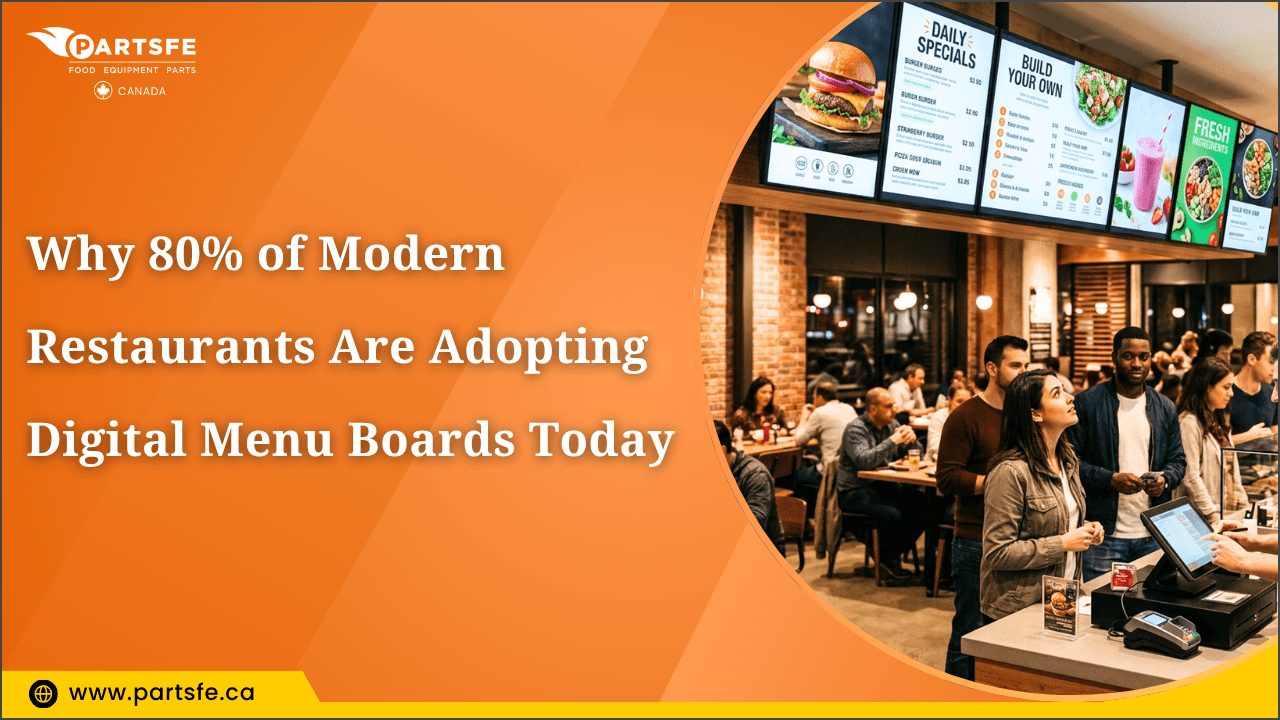
Why 80% of Modern Restaurants Are Adopting Digital Menu Boards Today
What if your restaurant menu could update instantly across every screen without reprinting anything? Restaurants once relied on printed menus, chalkboards, and static signs to display food and prices, which often led to outdated menus, slow updates, and repeated printing whenever something changed.
Today, digital menu boards solve this by allowing real-time updates, instant price changes, and accurate item availability across all locations. With a central system, issues like “wrong price shown” or “old combo still listed” can be fixed within seconds.
In this blog, we’ll break down what digital menu boards are, the different types of restaurants that use them, and how they improve daily operations, enhance customer experience, and support overall business growth.
What Is a Digital Menu Board and How Does It Work in Restaurants?
A digital menu board is a type of digital signage used by restaurants to display menus, prices, images, and promotional content on electronic screens instead of traditional printed boards.
These systems run on commercial-grade displays built for continuous operation, typically supporting 16/7 to 24/7 usage depending on the setup and environment. At a basic level, a digital menu board system consists of three core components:
-
Hardware: This is the physical screen used to display the menu. It is usually a commercial-grade LCD or LED display (commonly 43 to 55 inches), along with a media player or built-in system that powers the content.
-
Software (CMS): This is the control system that lets restaurants manage everything. It allows them to create, organize, and schedule menu content remotely from one dashboard.
-
Content: This refers to what customers actually see on the screen, including menu items, prices, images, videos, and promotional offers.
Together, these three components work as a connected system where content created in the CMS is delivered to the screens through a media player and updated over Wi-Fi or wired internet, allowing restaurants to change menus, pricing, and promotions instantly across single or multiple locations without printing or manual installation.
Types of Digital Menu Boards for Every Restaurant Style
Digital menu boards are available in different formats based on restaurant type, budget, and operational needs. Below are the main types used in modern restaurants:
Indoor Wall-Mounted Displays: These are commercial LCD or LED screens (typically 32 to 75 inches) installed above or behind service counters in cafés, fast-food outlets, and quick-service restaurants. They display high-quality visuals and support centralized content updates, making menu management easier across multiple locations.
-
Pros: Improve menu visibility, support strong brand consistency, and allow fast remote updates without reprinting.
-
Cons: Fixed installation limits flexibility, and they depend on stable infrastructure for continuous operation.
Drive-Thru and Outdoor Displays: These are high-brightness screens designed for outdoor use and enclosed in weather-resistant housing for drive-thru lanes and exterior ordering points. They remain clearly visible in direct sunlight and are built for continuous outdoor performance.
-
Pros: Excellent visibility in all lighting conditions and durable design for harsh weather environments.
-
Cons: Higher upfront cost, requires proper installation, and depends on stable connectivity.
Self-Ordering Kiosks: These are interactive touchscreen units (typically 22 to 27 inches) that allow customers to browse menus and place orders on their own. They are widely used in fast-casual and high-traffic quick-service restaurants.
-
Pros: Reduce staff workload, speed up ordering, and improve upselling through guided recommendations.
-
Cons: Higher setup cost, requires maintenance, and needs secure placement to avoid damage or misuse.
Tablet and QR Code Menus: These are digital menu solutions used in full-service and tech-forward restaurants, where customers view menus on tablets or by scanning QR codes on their own devices. They offer a flexible and contactless dining experience.
-
Pros: Easy to update in real time, flexible deployment, and minimal printing costs.
-
Cons: Depend on customer device usage, smaller screens can limit the viewing experience, and require system maintenance.
How Digital Menu Boards Impact Restaurant Operations and Customer Experience
Digital menu boards improve speed, sales, accuracy, and overall customer experience by making menu management more dynamic and data-driven. Below are the key impacts:
-
Faster Service & Higher Throughput: Digital menus help customers decide quicker, reducing perceived wait times. Even saving 5 to 7 seconds per order can increase capacity, allowing a restaurant serving 350 orders per hour to handle more customers during peak hours.
-
Increased Sales & Upselling: Dynamic visuals and promotions can increase average spending by 3 to 8%. For a restaurant earning $1,000,000 annually, even a 4% uplift adds about $40,000 in extra revenue.
-
Improved Accuracy & Operations: Integration with POS systems ensures real-time updates, reducing errors and waste. Changes can be pushed across multiple locations instantly, maintaining consistency and avoiding outdated pricing or items.
-
Better Customer Experience: High-quality visuals make menus easier to understand and more engaging, improving satisfaction. Rotating promotions also makes waiting feel shorter and the overall experience more engaging.
Check out Contactless dining technology: Reshaping the future of the restaurant industry in 2025, to see how QR menus and digital ordering are reshaping restaurants
Key Benefits of Digital Menu Boards for Restaurants
The key benefits of digital menu boards, mentioned below, highlight why they are becoming an essential upgrade for modern restaurants.
-
Cost Savings: They significantly reduce recurring printing and redesign costs, which can reach CAD $200 to $300 per update per location, while also lowering the manual labor required for physical menu changes.
-
Faster ROI: Most restaurants see a quick return on investment, often within 6 to 12 months, driven by a mix of cost savings and increased sales from improved menu presentation.
-
Better Marketing & Upselling: Digital screens allow restaurants to highlight combo deals, seasonal offers, and high-margin items more effectively, improving upselling opportunities and enabling quick campaign changes across locations.
-
Stronger Brand Image: Modern digital menus create a clean, consistent, and tech-forward look that enhances customer perception and strengthens overall brand identity.
-
Operational Flexibility: Menu updates, pricing changes, and promotions can be applied instantly across single or multiple locations, with support for multilingual content and real-time adjustments based on demand or availability.
-
Sustainability: By replacing printed menus and posters, restaurants reduce paper waste and overall material use, supporting more sustainable, environmentally conscious operations.
Explore the Future of self-serve beverage tech in Canadian restaurants: Digital signage & smart maintenance to see how smart systems are improving restaurant efficiency
Summary: Why Digital Menu Boards Are Essential for Modern Restaurants
Digital menu boards are transforming restaurant operations by enabling faster updates, improved efficiency, and stronger customer engagement. They help increase sales through better visuals and upselling while reducing manual work and operational errors. With flexible formats and real-time control, they support consistent branding and smoother service across locations.
Key Takeaways:
-
Digital menu boards enable instant updates across single or multiple locations
-
They improve order speed, reduce wait times, and increase throughput
-
Restaurants can boost sales through visuals, combos, and promotions
-
Operational errors and inconsistencies are reduced with POS integration
-
Multiple formats (indoor, outdoor, kiosks, QR) suit different restaurant needs
-
They enhance brand image while reducing printing and long-term operational costs
Shop now at PartsFe for high-quality commercial kitchen equipment parts, including dishwasher parts, fryer parts, ice machine parts, oven parts, and plumbing parts built for daily performance and durability.
References:
https://news.samsung.com/ca/digital-display-technology-brings-new-opportunities-in-the-canadian-chain-foodservice-industry
FAQs
What is the 2-minute rule in restaurants?
Staff should acknowledge or assist customers within 2 minutes of arrival, or upon request, to improve service speed and the customer experience.
Which menu item generates the highest profit?
The highest-profit menu items are typically beverages like coffee, soft drinks, and alcohol, along with low-cost foods such as fries and pasta.
What are the top POS systems used in restaurants in Canada?
The top POS systems used in Canadian restaurants include Lightspeed Restaurant, TouchBistro, Clover POS, and Toast POS, as they provide tools for order management, payments, inventory tracking, and reporting.
|
Disclaimer: This content is for general informational purposes only. Digital menu board performance and features may vary based on system, setup, and location. |