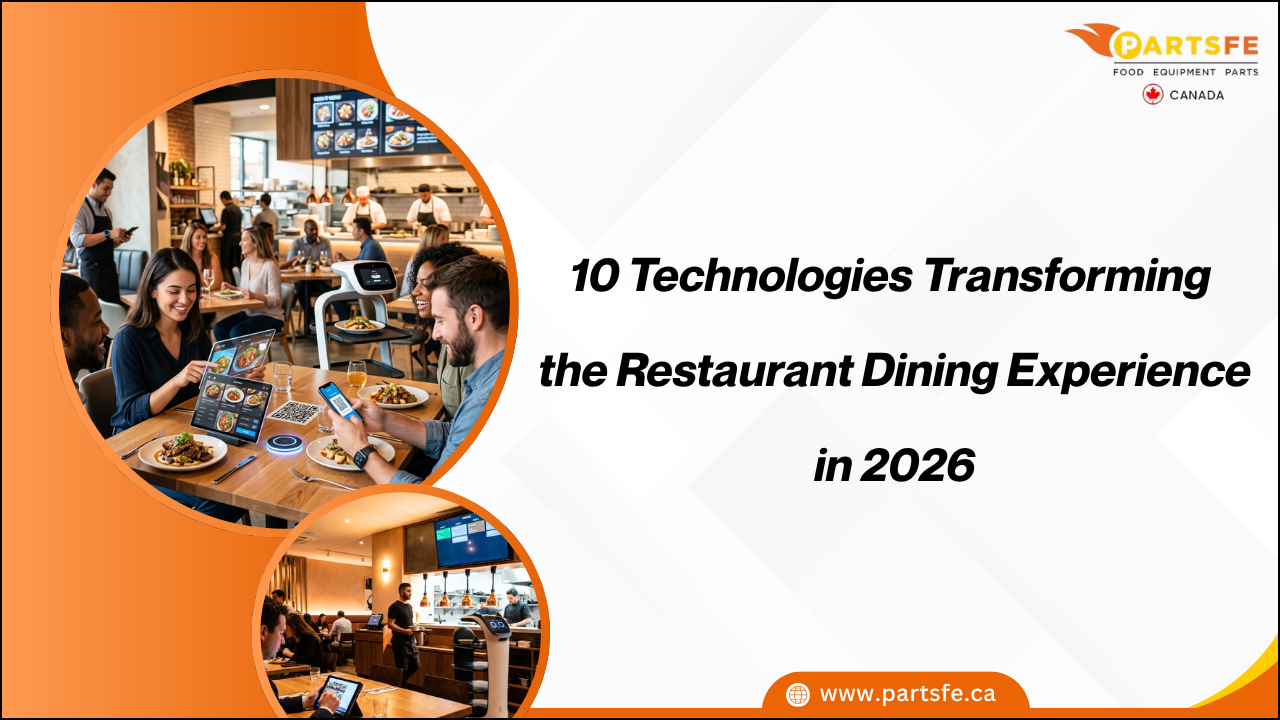
10 Technologies Transforming the Restaurant Dining Experience in 2026
The Canadian restaurant industry is undergoing a structural shift driven by digital transformation, evolving customer expectations, and ongoing operational pressures, including labor shortages and rising input costs. Restaurants are increasingly adopting technology not just as an enhancement, but as a core operational requirement.
Across Canada, from quick-service chains to independent dining establishments, digital tools are reshaping how food is ordered, prepared, delivered, and experienced. According to recent industry research, a significant portion of operators are investing in automation and AI-based systems to stabilize margins and maintain service quality in a competitive environment.
This article explores the key technologies shaping restaurant dining in 2026 and how they are being applied in the Canadian market.
Why Technology Is Essential for Modern Restaurant Dining Experiences
Restaurant technology is becoming a core driver of efficiency, customer satisfaction, and operational control in modern dining environments. Below, the key reasons are explained in detail.
-
Shifting Customer Expectations: Canadian diners increasingly expect fast service, digital convenience, and minimal friction during ordering and payment. QR menus, mobile ordering, and contactless checkout have moved from optional to standard expectations in many urban markets.
-
Workforce Constraints: Restaurants continue to face staffing challenges, particularly in high-turnover roles. Automation and digital systems reduce dependency on manual tasks such as order entry, inventory tracking, and payment handling, allowing teams to focus on core hospitality functions.
-
Data-Driven Decision Making: Digital systems now generate structured operational data, enabling restaurants to analyze sales trends, manage inventory more precisely, and adjust menus based on demand patterns.
Check out Restaurant tech revolution: Innovations driving the 2030 dining experience, exploring AI, automation, and smarter dining systems
10 Advanced Restaurant Technologies Enhancing Customer Experience in 2026
These technologies are reshaping how restaurants operate, serve customers, and manage efficiency in 2026. Below, the most impactful innovations are outlined.
-
AI-Powered Ordering Systems: AI ordering systems are used in apps, kiosks, and websites to speed up ordering and recommend items based on customer behavior, reducing errors and improving accuracy.
-
Contactless Payment Systems: Tap-to-pay cards, mobile wallets, and digital payments enable fast, secure transactions and reduce dependency on cash handling.
-
Self-Service Ordering Kiosks: Kiosks allow customers to place orders independently, improving speed, reducing queues, and increasing order accuracy during peak hours.
-
QR Code Digital Menus: QR menus let customers view and update menu items in real time on their phones without printing costs, improving flexibility and efficiency.
-
Smart Kitchen Automation: Automated cooking equipment standardizes food preparation using programmable settings, ensuring consistent quality and faster production.
-
IoT-Connected Kitchen Equipment: IoT systems monitor equipment performance, temperature, and usage in real time, helping detect issues early and reduce downtime.
-
Mobile Restaurant Applications: Mobile apps support ordering, reservations, loyalty programs, and promotions while giving restaurants access to customer data insights.
-
Digital Menu Boards: Digital displays replace printed menus, allowing instant updates to pricing, promotions, and menu availability across locations.
-
Robotics in Food Service Operations: Robots handle repetitive tasks like frying, beverage prep, and delivery in controlled environments, improving efficiency in high-volume setups.
-
Augmented Reality (AR) Dining: AR enhances dining experiences with 3D food previews, ingredient details, and interactive visuals for more engaging customer interaction.
Challenges and Barriers to Technology Adoption in Restaurants
Despite rapid digital adoption, restaurants still face financial, technical, and operational challenges that can slow down implementation. Below, the key barriers are discussed in detail.
-
High Upfront Investment Costs: Advanced systems such as kitchen automation, IoT infrastructure, and AI platforms require significant initial capital. For smaller restaurants, these costs can delay or limit adoption.
-
Integration with Legacy Systems: Many restaurants still rely on older POS and kitchen systems that are incompatible with modern digital tools. Integrating new technology with existing infrastructure can be complex and time-consuming.
-
Staff Training and Adaptation: Successful implementation requires staff to learn new systems and workflows. Resistance to change and lack of technical familiarity can slow down adoption and reduce initial efficiency gains.
-
Ongoing Maintenance and Subscription Costs: Many modern restaurant technologies operate on subscription-based models. While this reduces upfront costs, it introduces recurring operational expenses that can impact long-term profitability.
-
Data Security: As restaurants collect more customer and operational data, cybersecurity becomes increasingly important. System downtime or data breaches can significantly disrupt operations and damage customer trust.
Find out how food & beverage companies can adapt to energy volatility and supply chain disruptions and build resilience
Restaurant Technology Adoption Roadmap for 2026
Restaurants follow a phased implementation strategy to adopt new technologies gradually while minimizing disruption and maintaining stability. Below, the structured adoption phases are explained.
Phase 1: Digital Foundation Layer
Deploy basic digital tools such as QR code menus, contactless payments, and mobile ordering. These systems establish a core digital customer experience with minimal infrastructure changes.
Phase 2: Operational Optimization Layer
Introduce efficiency-focused systems like self-service kiosks, AI ordering, and digital menu boards. These reduce manual workload and improve order speed and consistency during peak hours.
Phase 3: Smart Infrastructure Layer
Adopt connected technologies, including IoT kitchen equipment, smart automation, and predictive maintenance systems. This phase enables real-time monitoring and reduced dependency on manual labor.
Phase 4: Experience Enhancement Layer
Implement customer-facing innovations such as mobile apps, personalization engines, and AR-based dining experiences to enhance engagement and brand differentiation.
Summary: Future Outlook of Restaurant Technology Beyond 2026
Restaurant technology will continue evolving toward fully connected, data-driven ecosystems where AI, automation, and real-time analytics work together to optimize both operations and customer experience. The focus will shift from standalone tools to integrated platforms that unify ordering, kitchen management, and customer engagement across channels.
Key Takeaways:
-
AI and predictive analytics will become central to menu planning, demand forecasting, and personalized customer experiences
-
End-to-end automation will expand in kitchens, reducing manual labor in repetitive and high-volume tasks
-
IoT-connected systems will enable real-time monitoring of equipment health and operational efficiency
-
Mobile-first dining experiences will dominate, with apps and digital wallets becoming standard touchpoints
-
Robotics adoption will increase gradually in quick-service and high-volume restaurant environments
-
Customer experience innovation (AR/immersive dining) will differentiate premium and experiential restaurant segments
Shop now at PartsFe to maintain peak performance for your commercial kitchen equipment parts. We supply a wide range of dishwashers, fryers, ice machines, plumbing, and oven parts built for daily commercial use.
References:
https://mbmagazine.ca/fintech-on-the-menu-transforming-restaurant-operations-in-the-experience-economy/
FAQs
How fast is ROI from restaurant technology?
Basic tools like QR menus and digital payments often deliver ROI in 3–6 months, while automation systems typically take 12–36 months.
What technology should small restaurants start with?
Start with cloud POS, QR code menus, and contactless payments to improve speed, accuracy, and reduce labor load.
Is AI personalization safe in restaurants?
Yes, most systems use anonymized customer behavior data with encryption and privacy controls to protect user information.
How is IoT different from kitchen automation?
IoT tracks equipment performance and alerts to issues, while automation controls cooking processes to improve consistency and efficiency.
|
Disclaimer: This article is for informational purposes only. Technology performance and outcomes may vary based on business type, implementation, and operating conditions. |