How Canadian Startups Are Transforming Pizza-Making With More Robots
Restaurants once depended entirely on chefs and manual kitchen operations, making pizza preparation slower and more labor-intensive. During busy hours, many struggled with staff shortages, delayed orders, inconsistent quality, and rising labor costs.
What if your pizza was made without a chef in just minutes? Robotics is now addressing key issues such as staff shortages, slow order times, and inconsistent food quality with AI-powered kitchen systems. Robotic kiosks and vending machines are already making pizza with minimal human involvement.
In this blog, we explore how Canadian startups are transforming pizza-making with robotics, the shift toward automated kitchens in restaurants, key challenges in adoption, and the role of AI-driven food systems in reshaping restaurant operations.
How Robotics Is Transforming Modern Pizza-Making
Robotics is reshaping the pizza industry through advanced automated kitchen systems that streamline food preparation, cooking, and service operations. These technologies reduce manual intervention while improving production speed, operational efficiency, and product consistency across locations.
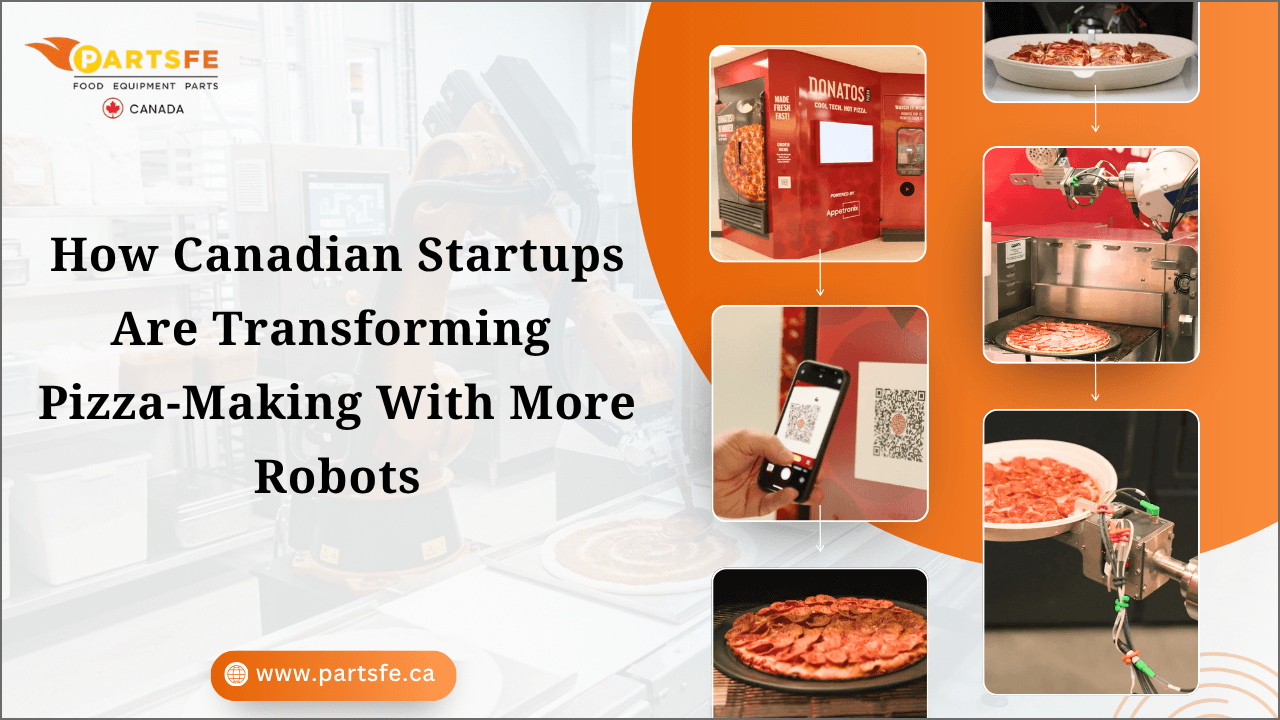
Example: In London, Ontario, Appetronix Inc. has developed an autonomous pizza kitchen system that automates key steps, including sauce dispensing, topping application, baking, and slicing. The system is designed to run with limited on-site staff while using software and remote monitoring.
These innovations are also changing how food businesses scale operations, allowing standardized pizza production across multiple locations with minimal human dependency. As a result, restaurants can respond more efficiently to demand fluctuations while maintaining consistent quality and faster service delivery.
Find out how AI agents help restaurants cut costs and streamline reservations through automation and better table management
Why Canadian Pizza Startups Are Adopting Robotic Kitchens
Restaurants are adopting robotic kitchens to reduce costs, improve efficiency, and deliver consistent food quality at scale, as explained below.
-
Lower Labor Costs: Labor is one of the largest cost drivers in restaurants, accounting for around 30 to 35% of total operating costs in Canada. Robotic kitchen systems can reduce staffing needs by automating key tasks like preparation and cooking, sometimes allowing operations with minimal on-site staff.
-
Consistent Food Quality: Automation ensures precise ingredient control and repeatable cooking results. Robots deliver the same portion sizes, topping distribution, and bake quality every time, reducing human error and improving product consistency across all orders and locations.
-
Faster Service and Higher Output: Robotic systems can prepare food in just a few minutes, enabling faster order fulfillment during peak hours. Higher throughput allows restaurants to serve more customers without increasing staff, improving revenue potential, and reducing wait times.
-
Improved Food Safety and Brand Value: Reduced human contact with food supports better hygiene and aligns with food safety expectations. In addition, robotic kitchens create a strong marketing appeal, as many customers are attracted to innovative, tech-driven dining experiences.
The table below highlights three Canadian companies using robotics for food preparation and delivery automation.
|
Company |
Key Technology |
Specialization |
|
Cibotica (Acquired by Appetronix) |
AI-Driven Dispensing |
Precision ingredient portioning and food assembly, reducing food waste by up to 50% |
|
LoopX Innovation |
Autonomous Delivery |
Canada’s first all-weather autonomous delivery robot for campus food delivery |
|
Real Life Robotics |
Sidewalk Delivery |
First municipally approved sidewalk delivery robot pilot in Canada, operating with Skip in Markham, ON |
Explore how AI robotics drives modernization in Canadian food processing systems through improved production quality
Challenges and Limitations of Kitchen Automation
The following are the key challenges and limitations affecting the adoption and performance of robotic kitchens in real-world operations.
-
Technical Reliability: Robotic kitchens operate under harsh conditions such as heat, moisture, and sticky ingredients, which can lead to jams or sensor errors. Even small failures may stop production, so regular maintenance and strong system design are essential.
-
Food Safety and Regulations: In Canada, robotic kitchens must follow the same food safety laws as traditional kitchens. Since there are no robot-specific rules yet, operators must meet existing sanitation and inspection standards, which vary by region.
-
Operational Complexity: These systems require careful coordination of ingredients, restocking, and maintenance. They also need proper infrastructure like power, ventilation, and technical support, making day-to-day operations more complex than traditional kitchens.
-
Customer and Workforce Acceptance: Some customers are unsure about robot-made food, while workers may worry about job changes. However, automation mainly shifts roles toward technical support and system management rather than removing jobs completely.
The Future of Robotic Kitchens and AI-Powered Food Service
Below are the key trends shaping the future of robotic kitchens and AI-powered food service.
-
AI and Computer Vision: Pizza robots will use AI and camera systems to inspect toppings, portion sizes, and cooking quality in real time, automatically adjusting ingredients and bake time. AI will also predict demand and optimize kitchen scheduling using sales data.
-
Example: In Canada, automated kitchen systems like RoWok use AI and sensors to help monitor food quality and improve cooking efficiency in real time.
-
Smart Ovens and Adaptive Baking: Smart ovens will use sensors and thermal imaging to adjust cooking for each pizza. They can change heat levels and baking time based on conditions like moisture or topping type, helping every pizza come out evenly cooked with the right crust and melt.
-
Cloud and Cluster Orchestration: Robot kitchens will be connected through cloud systems and managed together as one network. Operators can control multiple locations from a single dashboard, balance orders, schedule maintenance, and manage supplies more efficiently.
-
Workforce Rebalancing: As robots handle basic cooking tasks, fewer line cooks will be needed. At the same time, demand will grow for technicians, operators, and data workers who can manage and maintain robotic kitchen systems.
-
Franchise and Business Model Evolution: Franchises will shift toward ready-made robotic kitchen setups and leasing models. Some kitchens may be shared by multiple brands, and subscription-based systems will lower the cost of starting new locations.
-
Integration with Supply Chains: AI systems will track ingredient levels and automatically reorder stock when needed. These systems will also connect with delivery services, making the whole process from cooking to delivery faster and more automated.
-
Regulatory Adaptation: Food safety rules will evolve to cover robotic kitchens. Governments will introduce new guidelines and certifications to ensure automated food systems are safe.
Summary: The Impact of Automation on Food Service
Robotics and AI are steadily reshaping the food service industry by improving speed, consistency, and operational efficiency. While these technologies help reduce labor pressure and enhance scalability, they also introduce new challenges around maintenance, regulation, and adoption.
Key Takeaways
-
Robotic kitchens improve efficiency by automating food preparation and service tasks
-
Labor costs can be reduced through lower staffing requirements
-
Food quality becomes more consistent due to precise automation
-
Faster service enables higher order volumes during peak demand
-
Regulatory and maintenance challenges still limit full adoption
-
The industry is shifting toward AI-driven, scalable restaurant models
Shop now at PartsFe to keep your commercial kitchen equipment parts running at peak performance. We offer a wide selection of dishwasher parts, fryer parts, ice machine parts, and oven parts designed for durability and everyday operation.
References:
https://www.restobiz.ca/compass-group-canada-sjw-robotics-introduce-24-hour-automated-kitchen/
https://www.hrreporter.com/focus-areas/payroll/almost-at-a-crisis-canadas-restaurants-face-perfect-storm-of-costs-and-cautious-consumers/394395
FAQs
Are robotic kitchens environmentally friendly?
Yes, robotic kitchens can reduce food waste and improve energy efficiency through precise cooking, portion control, and automated inventory management.
What skills are needed to manage robotic kitchens?
Robotic kitchens require skills in system monitoring, equipment maintenance, software management, troubleshooting, and food safety operations.
Are robotic kitchens safe for food preparation?
Yes, robotic kitchens follow food safety standards and reduce direct human contact with food, helping improve hygiene and consistency.
|
Disclaimer: This content is for general informational purposes only. Robotics and automation performance may vary based on system type, configuration, and operating environment. |