How to Clean a Vulcan Deep Fryer in Commercial Kitchens: 5-Step Guide
Maintaining a Vulcan deep fryer in a commercial kitchen is not just about appearance—it directly impacts food quality, safety compliance, energy efficiency, and equipment lifespan. In high-volume operations, grease buildup, carbonized oil, and food debris can accumulate rapidly, leading to inconsistent frying temperatures, off-flavors, smoke issues, and premature component failure.
This comprehensive guide on how to clean Vulcan deep fryer equipment is designed for restaurant owners, kitchen managers, and service technicians. It aligns with manufacturer recommendations from Vulcan and best practices referenced in the Vulcan deep fryer manual. By following this structured approach, and replacing worn out parts with high-quality Vulcan deep fryer parts you can protect your fryer, reduce downtime, and extend life of fryer.
Why Regular Cleaning of a Vulcan Deep Fryer Is Important
Regular Vulcan deep fryer cleaning plays a critical role in maintaining safe, efficient, and high-performing commercial kitchen operations. During daily frying cycles, oil breaks down, and food particles settle on fryer walls, burners, and internal surfaces. Without routine cleaning, these residues interfere with heat transfer, oil circulation, and overall fryer performance.
When cleaning is neglected, both food quality and equipment reliability decline rapidly. Carbonized oil and grease buildup cause uneven cooking, darker products, and inconsistent texture, while also increasing smoke output and odor. Over time, this contamination forces the fryer to work harder, raising gas consumption and accelerating wear on internal components.
Proper Vulcan deep fryer cleaning delivers several key benefits:
-
Consistent Food Quality: Clean fry tanks and burners ensure stable oil temperatures, even heat distribution, and uniform cooking results that protect taste, texture, and appearance.
-
Reduced Fire and Safety Risks: Removing grease from fryer surfaces, burners, and exhaust areas significantly lowers the risk of flare-ups and kitchen fires in high-heat commercial environments.
-
Improved Energy Efficiency: Clean heat transfer surfaces allow the fryer to reach and maintain set temperatures faster, reducing gas usage and unnecessary stress on burners.
-
Health Code Compliance: A documented Vulcan deep fryer cleaning checklist supports inspection readiness and demonstrates proactive food safety and sanitation practices.
-
Extended Equipment Life: Routine cleaning slows corrosion and wear on critical deep fryer parts, including valves, burners, and thermostats, while protecting genuine Vulcan parts from premature failure.
Understanding the importance of regular Vulcan Deep Fryer cleaning reinforces that fryer maintenance is not just a sanitation task—it is a core operational practice that supports food quality, safety, efficiency, and long-term equipment reliability.
Looking for a dependable source of commercial restaurant equipment parts? Shop now at PartsFe CA and keep your equipment performing at its best. At PartsFe CA, we simplify equipment maintenance by supplying high-quality commercial kitchen and appliance parts designed for durability and precision fit. From motors, switches, valves, and control components to refrigeration and cooking equipment parts, we stock reliable solutions from trusted brands to minimize downtime and extend equipment lifespan. With competitive pricing, fast shipping across Canada, and knowledgeable support, we help you maintain efficient, uninterrupted foodservice operations.
Safety Precautions Before Cleaning a Vulcan Deep Fryer
Before starting any cleaning procedure, safety must be the top priority to protect staff, prevent equipment damage, and ensure compliance with commercial kitchen safety standards. Deep fryers operate at high temperatures and involve flammable gas, hot oil, and chemical cleaners, all of which require controlled handling.
-
Power and Gas Shutoff: Turn off the fryer completely and shut off the gas supply at the main valve. Lockout procedures should be followed where applicable. Always allow the unit to cool to a safe temperature before draining oil or removing internal components.
-
Oil Handling Safety: Hot oil can cause severe burns and slip hazards. Drain oil only after it has cooled sufficiently, using approved, heat-resistant containers designed for grease disposal or recycling. Never move or tilt a fryer containing hot oil.
-
Personal Protective Equipment (PPE): Wear heat-resistant gloves, non-slip footwear, long sleeves, and eye protection. Commercial degreasers and boil-out chemicals can be caustic, so skin and eye contact must be avoided at all times.
-
Follow Manufacturer Instructions: Always reference the Vulcan Hart manuals for model-specific cleaning guidance. Using incorrect cleaning methods, tools, or chemicals can damage thermostats, probes, burners, and other critical Vulcan deep fryer parts.
-
Chemical Handling Awareness: Only use cleaners approved for commercial fryers, and follow dilution and dwell-time instructions carefully. Mixing chemicals or over-concentrating solutions can damage stainless steel surfaces and internal components.
-
Ventilation: Ensure proper kitchen ventilation when using chemical cleaners or boil-out solutions. Adequate airflow prevents the buildup of fumes and supports a safer cleaning environment.
Taking these precautions before Vulcan deep fryer cleaning helps prevent injuries, protects equipment integrity, and ensures the cleaning process is both effective and compliant with commercial kitchen safety standards.
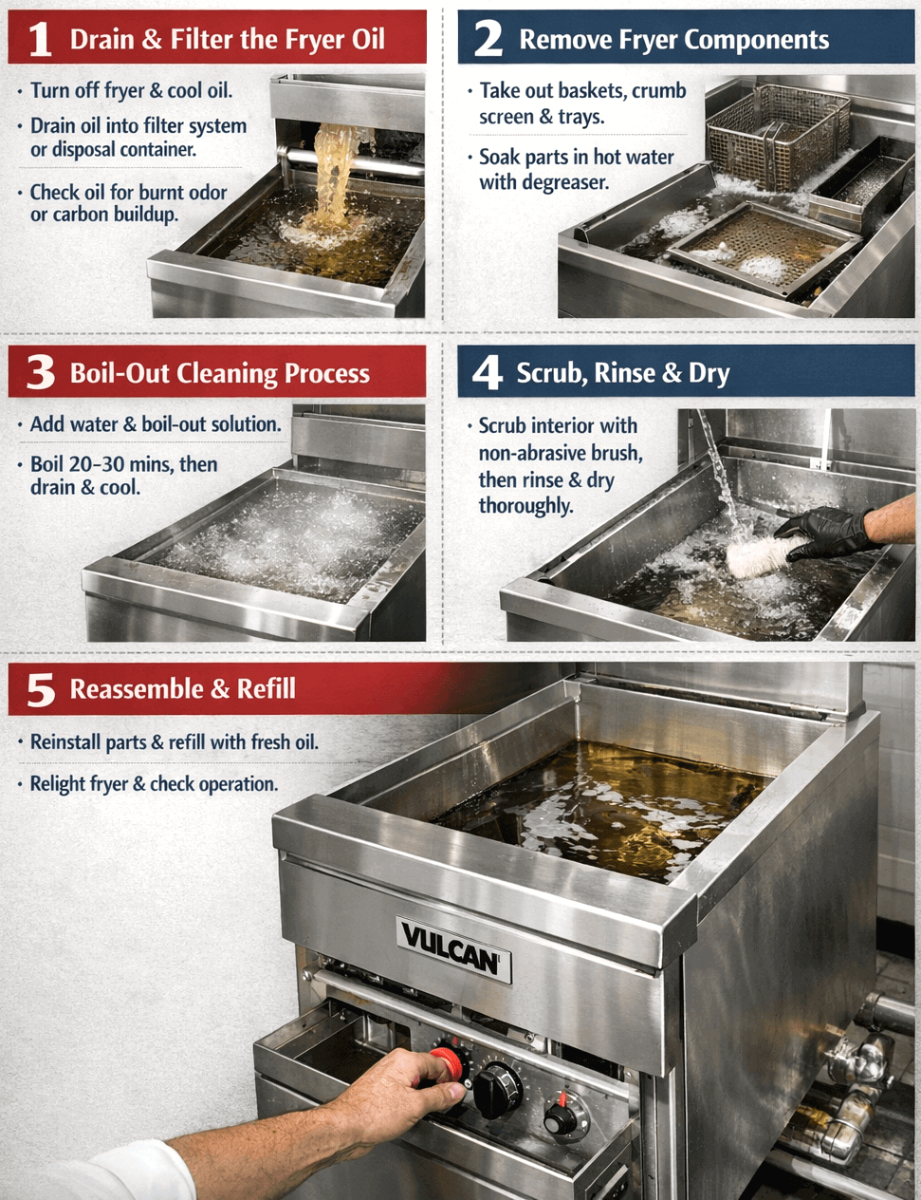
5 Easy Steps to Clean a Vulcan Deep Fryer Properly
This step-by-step process is suitable for daily, weekly, and deep-clean cycles, depending on kitchen volume.
|
Disclaimer: The information provided is for general maintenance reference only and may vary depending on your specific Vulcan deep fryer model. Always follow Vulcan’s manufacturer-approved procedures and safety instructions. Improper cleaning or skipping safety precautions may result in equipment damage or personal injury. |
Explore how to quickly diagnose and repair your commercial deep fryer by identifying common performance issues, understanding key components, and applying practical troubleshooting steps to restore safe, efficient operation and minimize downtime.
Common Mistakes to Avoid When Cleaning a Vulcan Deep Fryer
Even experienced kitchen staff can make cleaning mistakes that reduce performance, shorten equipment lifespan, and increase safety risks. These errors often lead to premature wear on critical deep fryer parts responsible for heat control, oil circulation, and combustion, making proper cleaning practices essential for maintaining safe operation and long-term equipment reliability.
|
Common Mistake |
Why It’s a Problem |
Correct Practice / Solution |
|
Using incorrect chemicals |
Household or acidic cleaners can corrode stainless steel, damage seals, and degrade internal components |
Use only chemicals approved for Vulcan Deep Fryer Cleaning |
|
Skipping burner and flue areas |
Causes soot buildup, restricted airflow, poor combustion, and uneven heating |
Clean burners and flue passages regularly to ensure proper combustion |
|
Reassembling while wet |
Trapped moisture leads to oil breakdown, splattering, and internal corrosion |
Thoroughly dry the fry tank and components before refilling with oil |
|
Ignoring the cleaning schedule |
Allows grease and carbon buildup, accelerating wear on deep fryer parts |
Follow a consistent daily, weekly, and deep-clean schedule |
|
Using abrasive tools |
Scratches stainless steel surfaces, creating areas for grease and bacteria buildup |
Use non-abrasive pads and fryer-safe brushes only |
|
Not documenting cleaning tasks |
Steps are often skipped during busy shifts, causing inconsistent maintenance |
Maintain a Vulcan deep fryer cleaning checklist for accountability |
Check out how this commercial air fryer buying guide: how to select, use, and clean walks you through selecting the right unit, proper use, and effective cleaning for reliable performance.
Summary: Best Practices for Long-Term Fryer Hygiene
Maintaining long-term hygiene and performance of a Vulcan deep fryer requires a disciplined, consistent cleaning routine. By following manufacturer-recommended procedures, using approved cleaning chemicals, and properly maintaining critical Vulcan deep fryer parts, commercial kitchens can achieve reliable cooking performance, improved safety, and lower operating costs. Regular maintenance also ensures compliance with food safety standards while protecting the overall integrity of the equipment.
Key Takeaways:
-
Consistent daily, weekly, and deep-clean routines help maintain oil quality and stable frying performance.
-
Following guidance from the Vulcan deep fryer manual and Vulcan Hart manuals prevents damage to internal components.
-
Using approved chemicals and proper tools protects essential fryer surfaces and parts.
-
Proactive cleaning reduces breakdowns, extends equipment lifespan, and minimizes costly downtime.
-
A structured maintenance approach safeguards your investment in professional-grade commercial cooking equipment.
FAQs
How do you remove caked-on grease from a Vulcan deep fryer?
Caked-on grease is best removed using a fryer boil-out process with a commercial degreasing chemical. Gentle boiling loosens carbonized oil, making it easier to scrub without damaging the fry tank.
How often does a Vulcan fryer need to be cleaned?
Daily surface cleaning is recommended, with weekly boil-outs for moderate use. High-volume kitchens may require boil-outs every 3–5 days to protect Vulcan commercial deep fryer performance.
What chemical is used to clean a Vulcan deep fryer?
Approved fryer boil-out chemicals or heavy-duty commercial degreasers designed for stainless steel fryers should be used. Always follow guidance from the Vulcan deep fryer manual.
How to clean your gas burners on a Vulcan deep fryer from a commercial food truck?
Shut off the gas supply, remove the burner assemblies, and brush off grease and soot using a soft wire or nylon brush. Ensure burners are completely dry before reinstalling to prevent ignition issues in mobile environments.