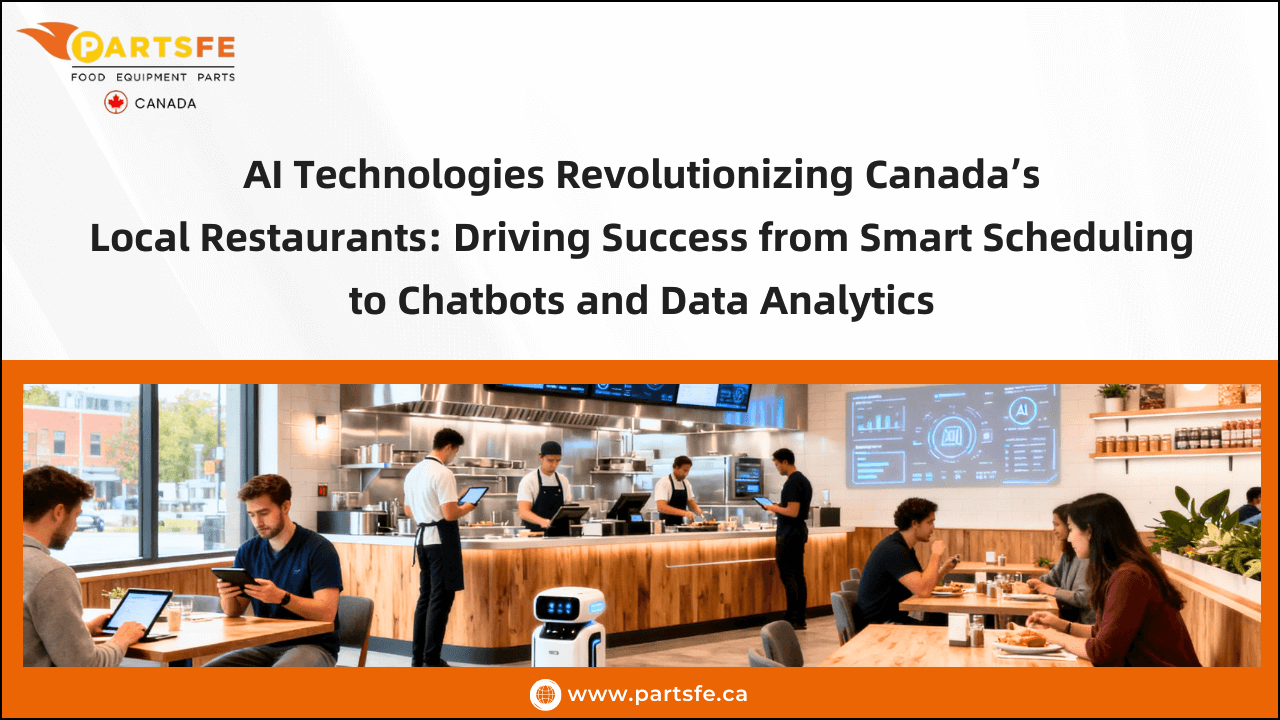
AI Technologies Revolutionizing Canada’s Local Restaurants: Driving Success from Smart Scheduling to Chatbots and Data Analytics
AI is rapidly transforming Canada’s local restaurant scene, bringing new levels of efficiency, customer satisfaction, and profitability. From AI-driven smart scheduling that eliminates staffing headaches to chatbots that streamline customer interactions and predictive analytics that forecast sales with near-perfect accuracy, restaurants across Toronto, Vancouver, Calgary, and Montreal are adopting intelligent technologies to stay competitive.
These innovations reduce operational pressures, enhance customer experiences, and support restaurant owners in making data-backed decisions in real time.
AI is no longer a luxury for big chains—it’s becoming a necessary competitive advantage for Canadian small and mid-sized eateries striving for consistent growth.
AI-Powered Smart Scheduling Transforming Canadian Restaurant Operations
Smart scheduling platforms powered by AI are becoming one of the most impactful tools for local restaurants in Canada, helping solve one of the industry’s biggest challenges: staffing.
Key Transformations Enabled by AI Scheduling:
AI-driven scheduling is reshaping workforce management for Canadian restaurants by automating shift planning, predicting labor needs, and reducing operational stress. These intelligent systems help owners maintain efficiency, control labor costs, and ensure smoother day-to-day operations.
|
Feature |
Description |
Impact |
|
Automated Shift Planning |
AI tools analyze historical sales data, weather patterns, holidays, and events to predict staffing needs. |
Eliminates understaffing during peak hours Reduces overstaffing on slow days Helps managers save hours each week |
|
Real-Time Staff Optimization |
AI systems re-adjust scheduling automatically when employees call in sick, request shift swaps, or when unexpected surges occur. |
No more last-minute scheduling chaos More balanced workloads and happier employees |
|
Compliance and Labor-Law Alignment |
AI ensures schedules comply with provincial labor regulations such as overtime rules and mandatory rest periods. |
Minimizes accidental labor violations Reduces financial risks and penalties |
|
Predictive Labor Cost Control |
By forecasting demand, AI suggests the most cost-effective staffing model for each day. |
Improved profit margins More accurate weekly planning |
|
Seamless Integration with POS and Payroll |
AI scheduling software syncs with point-of-sale systems to track real-time labor-to-sales ratios. |
Immediate visibility into operational performance Fast adjustments to reduce unnecessary costs |
AI-powered scheduling is helping Canadian restaurants reduce labor stress while improving overall operational flow.
Explore how AI agents help restaurants cut costs and streamline reservations by automating guest interactions, reducing labor workload, and ensuring smoother, faster booking experiences.
AI Chatbots Enhancing Customer Service and Engagement
AI chatbots are becoming essential digital assistants for Canadian diners, offering quick, accurate, and 24/7 communication.
Below are the most common ways chatbots are transforming customer interactions:
|
Feature |
Description |
Benefits |
|
Instant Table Reservations |
Customers can book tables through automated chatbots on websites, SMS, Instagram, and Facebook Messenger. |
|
|
Automated Order Taking |
Chatbots guide customers through menu items, customization options, allergen warnings, and add-ons. |
|
|
Customer Support and FAQs |
Bots provide immediate answers to questions about hours, menus, delivery times, and location details. |
|
|
Personalized Marketing |
AI chatbots track preferences to deliver targeted promotions. |
|
|
Multilingual Capabilities |
Essential in diverse markets such as Toronto and Vancouver, AI chatbots can communicate in multiple languages. |
|
Canadian restaurants using chatbots are seeing reduced operational stress, improved guest journeys, and stronger customer engagement.
Data Analytics: The New Backbone of Canadian Restaurant Decision-Making
Data is now the most powerful asset for restaurant owners. AI-driven analytics give restaurants insights that would previously take days or weeks to analyze manually.
1. Real-Time Sales Insights: AI tracks daily, hourly, and item-level sales trends to help restaurants understand performance in real time.
Use Case: Restaurants in Toronto’s entertainment districts use AI to adjust menu offerings during event-based surges.
2. Customer Behavior Analytics: AI analyzes ordering history, dining preferences, peak times, and spending habits to reveal customer behavior patterns.
Use Case: Eateries use customer segmentation insights to launch personalized promotions and improve customer retention.
3. Menu Engineering Tools: AI identifies bestsellers, high-margin items, and underperforming menu components to support smarter menu decisions.
Use Case: Restaurants optimize their menu layout by highlighting top-performing and high-margin dishes for increased profitability.
4. Employee Performance Metrics: AI monitors prep speed, serving accuracy, and customer ratings to evaluate staff performance objectively.
Use Case: Managers use AI-generated performance insights to improve staff training, boost accountability, and enhance service quality.
5. Financial Forecasting Models: AI predicts weekly and monthly revenue patterns, helping owners anticipate demand and manage finances more effectively.
Use Case: Restaurants leverage revenue forecasts to strengthen budgeting, improve planning, and make strategic operational decisions.
AI-powered analytics make it easy for restaurant operators to turn raw data into actionable decisions that increase profitability and reduce risk.
AI for Inventory, Waste Reduction, and Supply Chain Optimization
In a country as expansive as Canada—where supply chain issues can severely impact local restaurants—AI helps solve critical operational challenges.
1. Automated Inventory Forecasting
AI uses historical sales data, usage patterns, and seasonal trends to accurately predict how much of each ingredient a restaurant will need. This ensures kitchens stay consistently stocked without over-ordering, helping restaurants control food costs, reduce storage waste, and maintain smooth day-to-day operations.
2. Expiry Tracking and Waste Management
With real-time monitoring of expiration dates, spoilage patterns, and overall waste generation, AI helps restaurants understand exactly where food waste is occurring and how to reduce it. This leads to better ingredient rotation, more responsible consumption, and a noticeable reduction in both operational expenses and environmental impact.
3. Vendor Performance Tracking
AI evaluates supplier reliability by analyzing delivery times, product consistency, and pricing trends. This allows restaurants to identify their strongest vendor partners, negotiate better terms, and make informed procurement decisions that support long-term operational stability and consistent ingredient quality.
4. Automated Reordering
AI automatically triggers restocking when inventory reaches predefined thresholds to prevent shortages and eliminate the manual effort of monitoring stock. This allows restaurant teams to focus more on service and kitchen performance while maintaining uninterrupted access to essential ingredients.
This level of supply chain intelligence is invaluable for local Canadian restaurants operating on tight margins.
Check out smart restaurant inventory tips to maximize profit in Canada and streamline your kitchen operations with data-driven precision.
Predictive Technologies Driving Efficiency in Local Restaurants
Predictive AI tools help restaurant operators anticipate the future and prepare accordingly.
1. Predicting Customer Traffic Patterns
By analyzing factors like weather forecasts, holiday schedules, local events, and historical foot-traffic data, AI can predict when customer volume will increase or slow down. This helps restaurants schedule staff more strategically, prepare ingredients at the right times, and deliver faster, more efficient service.
2. Predicting Menu Item Demand
AI models examine sales history, customer preferences, and seasonal patterns to determine which menu items are likely to sell most on a given day. This allows restaurants to plan production more effectively, reduce ingredient spoilage, and ensure best-selling items are always ready for peak demand.
3. Predictive Equipment Maintenance (AI-IoT)
AI-enabled sensors continuously monitor the performance of refrigerators, ovens, fryers, HVAC systems, and other critical equipment. By detecting issues early, these systems help prevent unexpected breakdowns, reduce costly repairs, and keep the kitchen operating safely and efficiently.
4. Predictive Marketing
AI identifies the most effective times to send promotional messages based on customer behavior, past engagement, and local trends. This helps restaurants connect with customers at the right moment, improve campaign performance, and strengthen long-term loyalty.
Predictive AI is giving Canada’s restaurants the ability to operate with greater certainty and agility.
The Future of AI Adoption in Canadian Restaurants
The future of Canada’s local restaurants lies in fully intelligent operations where AI assists every level of the business—from the kitchen to the customer.
Key Takeaways:
-
Adaptive Customer Personalization: AI customizes menus, offers, and ordering experiences based on individual preferences.
-
AI-Powered Operational Autonomy: Restaurants will use intelligent systems to manage scheduling, inventory, and marketing almost automatically.
-
Unified Data Ecosystems: POS, CRM, PMS, and kitchen systems will integrate into a single AI-powered platform.
-
Greater Staff Support, Not Replacement: AI handles repetitive tasks, allowing staff to focus on hospitality and creativity.
-
Smarter Decision-Making for Owners: Operators can access instant insights from any device, anywhere in Canada.
AI is reshaping the Canadian restaurant landscape helping local eateries streamline operations, improve customer experiences, and elevate long-term profitability.
Looking for replacement parts to keep your commercial kitchen equipment performing at its best? PartsFe CA provides top-quality components from thermostats and heating elements to gaskets, sensors, and burner assemblies sourced from trusted brands like Hobart, Garland, Vulcan, and Rational. Minimize downtime, improve operational efficiency, and ensure your equipment runs smoothly with durable, high-precision parts designed for Canada’s demanding foodservice environments.
References:
https://restaurant.org/education-and-resources/learning-center/workforce-engagement/restaurant-and-hospitality-leadership-center/
FAQs
How expensive is AI integration for small Canadian restaurants?
AI tools range from $50 to $500 per month depending on features, making them accessible even to small businesses.
Can AI help restaurants reduce labor costs?
Yes. Smart scheduling, automated order systems, and predictive staffing significantly reduce labor inefficiencies.
Does AI replace restaurant staff?
No. AI performs repetitive and time-consuming tasks, allowing staff to focus on guest experience and higher-value work.
How long does it take to see ROI?
Most restaurants see measurable improvements within 2–4 months, especially in labor savings and reduced waste.
Is AI difficult to use for non-technical restaurant owners?
Modern AI platforms are built with intuitive dashboards, automation tools, and minimal training requirements.